The Art of Eliminating Distractions

I’m my own worst enemy when it comes to staying focused. On bad days it’s like I almost invite every possible form of distraction to come my way. I purposely go on facebook every other moment, I counter attack my rational mind that tells me not to press on that link and get back to the task on my list. And as my day passes I get more and more dissatisfied with myself and my lack of self-discipline.

Being self-employed and having chosen a lifestyle, where I don’t wish or need to work fulltime, I potentially have time for many other activities than my work. However, if I let myself get distracted constantly then my work hours are stretched, and I end up sitting the whole day in front of my laptop instead of just the hours that I am actually working. It is utterly dissatisfying, and I really don’t have anyone to blame but myself.

Recently I have tried to work consciously to change these patterns of self-sabotage and the main thing I have worked on is my own approach and mindset:

I found that the core thing is to consciously make a decision to stick with the schedule that I set up for my day – to really commit to stay away from distractions (easier said than done!). I need to tap into a deeper level of awareness so that whenever I see myself being pulled by an impulse or urge to look something up, text a friend, watch that youtube clip someone sent me etc., I don’t follow that urge. Instead I notice it and write it down on a piece of paper (if it’s something I actually want to do later), and then the impulse slowly fades away since I don’t act upon it. Cultivating such discipline and self-awareness is really the key element to staying focused and not letting just any kind of desire lead you.

In the practice of eliminating distractions and cultivating focus I found four things that helped me as well:

Putting the phone on airplane mode
My main distractions come from the internet – and especially from my smartphone, since I don’t get email notifications, messages or alerts on my laptop. By putting the phone on airplane mode I can to limit the noise that interrupts me while working.

Setting the timer
I set the timer to 25 minutes and commit to work on my tasks for that amount of time. It is much easier to commit for a short time like that than to set yourself up to not getting distracted for – say – 4 hours.

Making clear distinctions between work-mode and break-mode
The brain needs breaks to be able to work well. On bad days my breaks just consist on reading something random on the internet. I make an effort to intentionally do something completely different in even a 5-minute break. I play a song aloud and sing along, I go out on the balcony and breathe deeply, I shake my body or go for a short walk around the house enjoying the air and sounds of the world.

Breaking the day into shorter slots
If I have a long work day ahead, and I haven’t scheduled in any other activities, the outlook of almost unlimited time makes me more prone to invite distractions into the day. If I make sure to change locations during the day, go out for lunch, schedule an appointment or skype meeting in the middle of the day, then I am more motivated to stay focused.

How do you practice the challenging art of eliminating distractions?

5 ways to work with the flow

I was supposed to sit on an airplane right now and spend the whole day travelling. I don’t. They cancelled my flight and instead I’m on the balcony in my house. Nobody knows yet. I will fly all night instead so it feels like I have been given an extra day in life.

I could have been upset about the fact that I had to change my connecting flight, that I was arriving a day later, that I had to write my clients about a sudden change in work availability. It wouldn’t have made any difference about the actual situation, but somehow we often get stuck in negative and unfruitful reactions to things that happen to us, and spend a lot of energy on something we can’t change anyway. Once you realize that it really doesn’t change anything, it seems like such a waste of time.

The situation got me thinking about how working with the flow of things helps me keep a more balanced state of mind in everything I do – but especially when it comes to my professional work.

Working with clients – and with people in general – demands you to let go of control. This could potentially stress me out a lot. When I was younger I would often create a huge amount of mental stress by obsessing about the outcome of my efforts. So much that I would often feel paralyzed in my actions because I was too afraid of something going wrong or things not working out exactly as I envisioned them. I have become much more aware of these obsessive patterns and how they don’t serve me, but sometimes they still show up.

waterfallThe other day I went on a daytrip to a waterfall with a friend, I was mesmerized by how graceful the water moves. It always makes its way, but doesn’t try to penetrate or move the obstacles on its path. And that is exactly why it can be soft and still keep going with an innate power and drive.

My friend and I are both self employed and we talked about how to work with clients, be successful in what we do and enjoy our work. “I’ve heard the key is to work towards a goal without being too attached to the outcome” I told him. Sounds right, but how do you actually do that? We asked ourselves.

A big part of it is to let go of wanting to control everything.

Here are five ways you can try to work with the flow and not against it:

Let go of what you can’t change
Use what is given to you
Work with great discipline but be flexible
Respond constructively to the situations that arise
Use the circumstances that inspire you to fuel your work

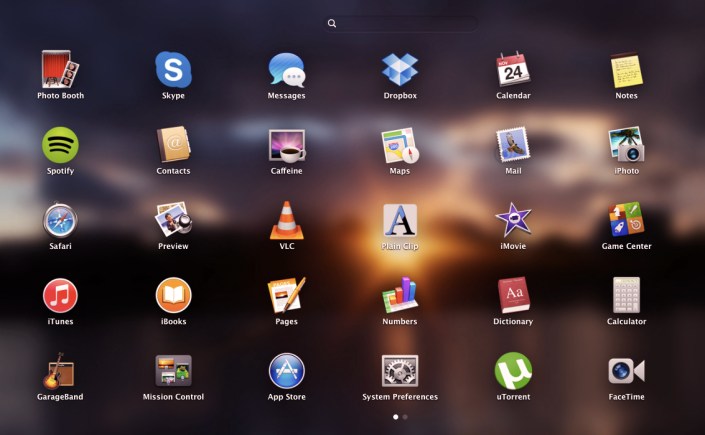
5 apps I wouldn’t live without


It might be a slight exaggeration to say I wouldn’t live without these apps. However, I use them on a daily basis and they help me stay balanced, focused, organized and inspired.

Insight timer
Insight timer is a mediation app. It is very simple and allows you to set a desired time to meditate. It will start off your meditation and let you know when time is up with the sound of a Tibetan singing bowl. It keeps statistics so you can keep track of your daily practice. It makes it so easy to begin the day with a meditation session, and I love the beautiful sounds it displays. My daily meditation practice is essential for me to keep a balanced life and reducing the feeling of stress.

Task
In some ways I am still quite old fashioned. I like to write things by hand; like to-do lists, and I especially enjoy crossing the tasks of when done. With Task I can get the same feeling of accomplishment by swiping the task of the list when done. This app has a very simple layout, and you can list all your activities on the days you plan to do them.

Toggl
With Toggl I track the time of the tasks I work on during the day. I can name the the task, assign it to a specific project, and it will be listed with the time spent and the exact time and date it was done. This way I can se the actual time spent on individual tasks for one project, and I can even send a report off to a client, showing the time I have spent on his projects.

Downcast
I use downcast to manage my podcast subscriptions. I can easily discover new podcast by browsing through the topic listing. I enjoy listening to podcasts to get inspiration, learn new things and get ideas. It’s a great way to give your eyes – who are constantly at work otherwise – a break, or to fuel your creativity by drawing while listening to a podcast. Love it.

VSCOcam
I like photography and all things visual, so this is a perfect app. I just recently discovered it, but it is a great place to look at beautiful photographs, get inspired, edit your own pocket shots, and share images on different social media platforms.

Which apps do you use everyday?

Remember to breathe!


It is so easy to get caught up with stress, to be busy and to feel overwhelmed. However the best tool to manage stress is something we always have with us: the breath. It is actually so simple, and yet we tend to forget it. We rarely pay attention to our breath during the day.

The last weeks I’ve been reading “The Art of Communication” by Thich Nhat Hanh, a Vietnamese monk and Zen master, and it really got me thinking about how much power lies in our breath. If we use it consciously, it can help us reduce the feeling of stress and acquire a greater sense of calmness.

Thich Nhat Hanh encourages us to be more mindful in everything we do. The first step is to pay attention to our breath; by paying attention to our breath we bring the awareness back to our body and to the situation we are in right now.

What often happens when we work is that we tend to be so focused on our thoughts, ideas, and the problems we are trying to solve. On our plans, emails, conversations we have had, and meetings we are going to have. We move from one task to another without any kind of break. Quickly the day passes and our mind is galloping away like a wild horse.


“Breathing in I am aware of my body, breathing out I release all the tension in my body”  T.N.H


It often feels like it is more productive to act fast and get as much done as possible. However I have found that by taking short breaks, looking away from the computer screen, breathing, and changing my seating position, I can work more consciously. I get better at distinguishing between things that are important and things that can wait. It stops me from merely reacting to whatever lands on my plate, and instead I have the opportunity to choose to respond. When we react we are often driven by our emotions, whereas when we respond we act from a more conscious place.


“Whenever the phone rings, you can hear it as a bell of mindfulness and stop whatever you are doing. Instead of rushing to answer the phone, you can breathe in and out with awareness three times before answering the phone to make sure you’re truly present for whoever is calling.”  T.N.H


It is all about changing your way of seeing things. By consciously trying to be aware of your breath, your body, and your actions throughout the day, you get less carried away by the stream of inputs, demands and pressure that meet you.


“When you breathe in mindfully, there is a happy reunion between the body and mind. This doesn’t take any fancy technique. Just by sitting and breathing mindfully, you’re bringing your mind home to your body. Your body is an essential part of your home. When you spend many hours with your computer, you may forget entirely that you have a body until it’s too achy, stiff or tense for you to ignore. You need to take breaks and return to your body before it gets to that point”  T.N.H


I invite you to try breathing like this:

Inhale deeply, feel the air going through your nostrils down the lungs, expanding them and expanding the entire trunk of your body; lung, stomach, lower back and waist. Then open your mouth and exhale fully in an even and gentle way. Feel your breath going out, and releasing a wave of relaxation through your entire body from the top of your head and all the way down to the tip of your toes. Notice your scalp, your forehead, your eyes, your temples, face, throat, shoulders, neck, arms, chest, stomach, back, hips, pelvis, legs and feet.

Breathe deeply like this three times, and notice how you feel afterwards. Notice how you come back to your body. How the activity in your mind has slowed down. How the tensions in your body have loosened. How whichever emotion you were feeling before is less strong now. Breathing deeply is such a simple exercise, but the effect is great, and you can do it anytime and anywhere.


“Breathing in and out three times is enough to release the tension in the body and smile, and then we can continue our work.”  T.N.H


I would love to hear, how it feels when you take time to breathe deeply and consciously throughout your day.

How using desire paths will spark your productivity


Do you often feel that what you have to do is not aligned with what you feel like doing? And then you end up in an unproductive and destructive work pattern? I used to experience this a lot.

The other day I watched a TEDx talk by Chris Bailey, the creator of the project ‘A Year of Productivity’. In the talk he mentions the University of California at Irvine and their different approach to design. He tells how they waited some time before building actual sidewalks during the construction of a new campus. They looked at the paths that the students created spontaneously by walking around the buildings, and then built the sidewalks on top of them. They chose to use the students’ desire paths.

I immediately loved this concept of desire paths. It was exactly what I had been looking for to describe, how I have managed to become more productive: by integrating my desire paths into my work schedule.

Let me give you an example.

I used to plan to have one morning a week for writing blog posts. I had this idea that I work best in the mornings and, therefore, it would be the first thing on my schedule. But, what really happened was that I prolonged the morning by surfing aimlessly on the Internet until at some point I forced myself to look at the blinking cursor in an empty word document while lacking inspiration. I would end up feeling frustrated because I had procrastinated too much and was behind schedule.

I started paying attention to when I felt inspired and what would get me writing. I realized that I was more likely to concentrate on writing when I allowed myself to start the day by taking a walk and getting my mind to flow; then read some articles and maybe watch an inspiring talk to fuel creativity. Slowly, a topic for my new post would form in my mind, and when I actually sat down in front of the computer, my hands would start typing almost as if by themselves since I would be bursting with ideas.

What it really comes down to is to work with your personal flow and not against it. I am not talking about just following any desire you have. You should really look at what energizes you, what ignites your creativity, and then do this. Thereby, you can eliminate the patterns that drain you and keep you from being productive.

How to map your own desire paths:

  • What activities do you constantly choose to do at a different time than planned, or skip altogether? Notice why this happens. Could you schedule them at another time of the day?
  • What tasks do you always feel resistance towards doing? Notice why there is resistance. Notice what helps you do them and what doesn’t. Incorporate the things that help you into your schedule.
  • What sparks your creativity? Plan this activity to take place before you have to write a blog post/brainstorm/create a new product.
  • What calms your mind? Plan doing this activity before you have to perform/teach/work on difficult tasks.
  • What gives you confidence? Plan doing this activity before you have to talk to potential new clients/sell your products/meet with collaborators.
  • What energizes you? Plan doing this activity before you have to do dreaded but unavoidable tasks.

This way you are able to plan your work with awareness and increase productivity. In the comments below, I would love to hear, how you use your desire paths when planning your schedule.